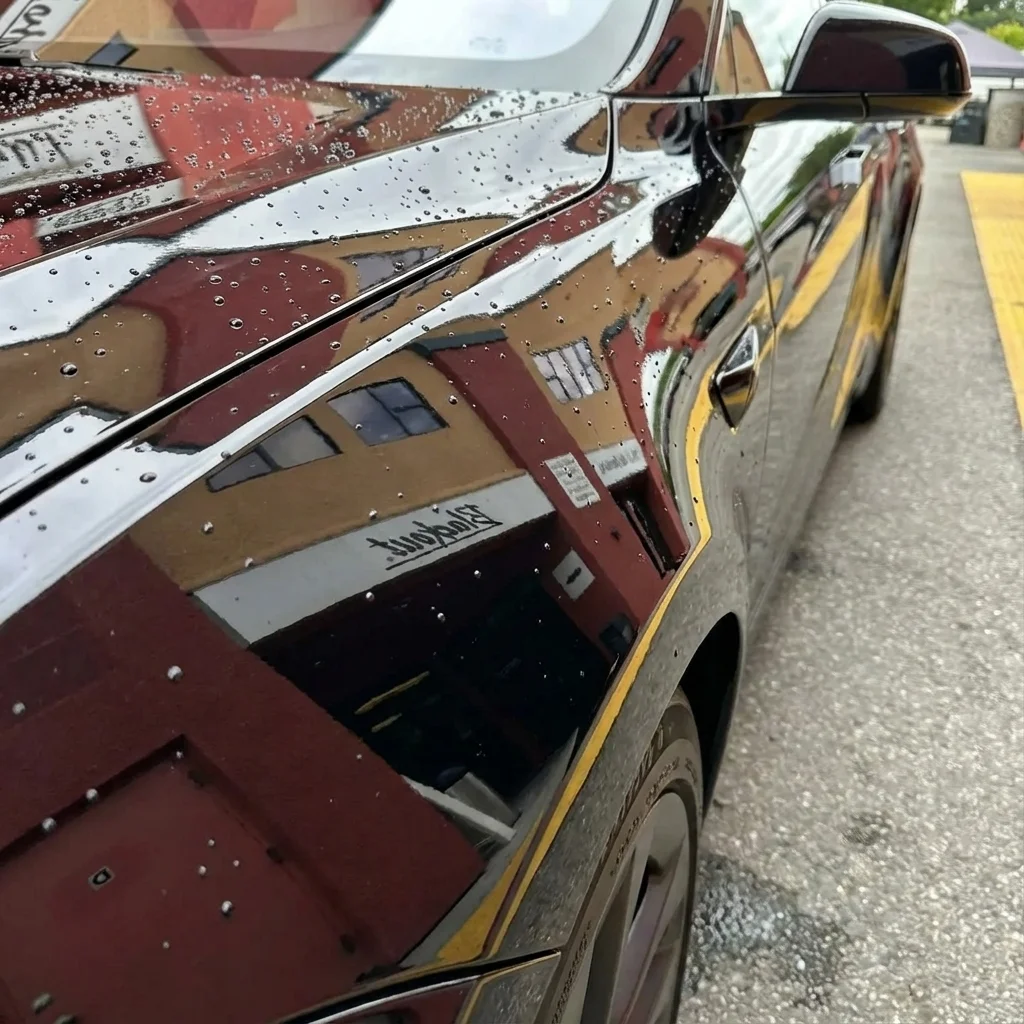
PPF (clear bra) is a physical barrier against rock chips, scratches, and road debris ($1,500-$6,000 for full front). Ceramic coating repels water, dirt, and UV ($800-$2,500 for full vehicle). Best approach: PPF on high-impact areas + ceramic coating on entire vehicle for maximum protection.
PPF vs ceramic coating comparison: cost, durability, what each protects against, and when you need both. Expert guide from 33+ years of vehicle protection.
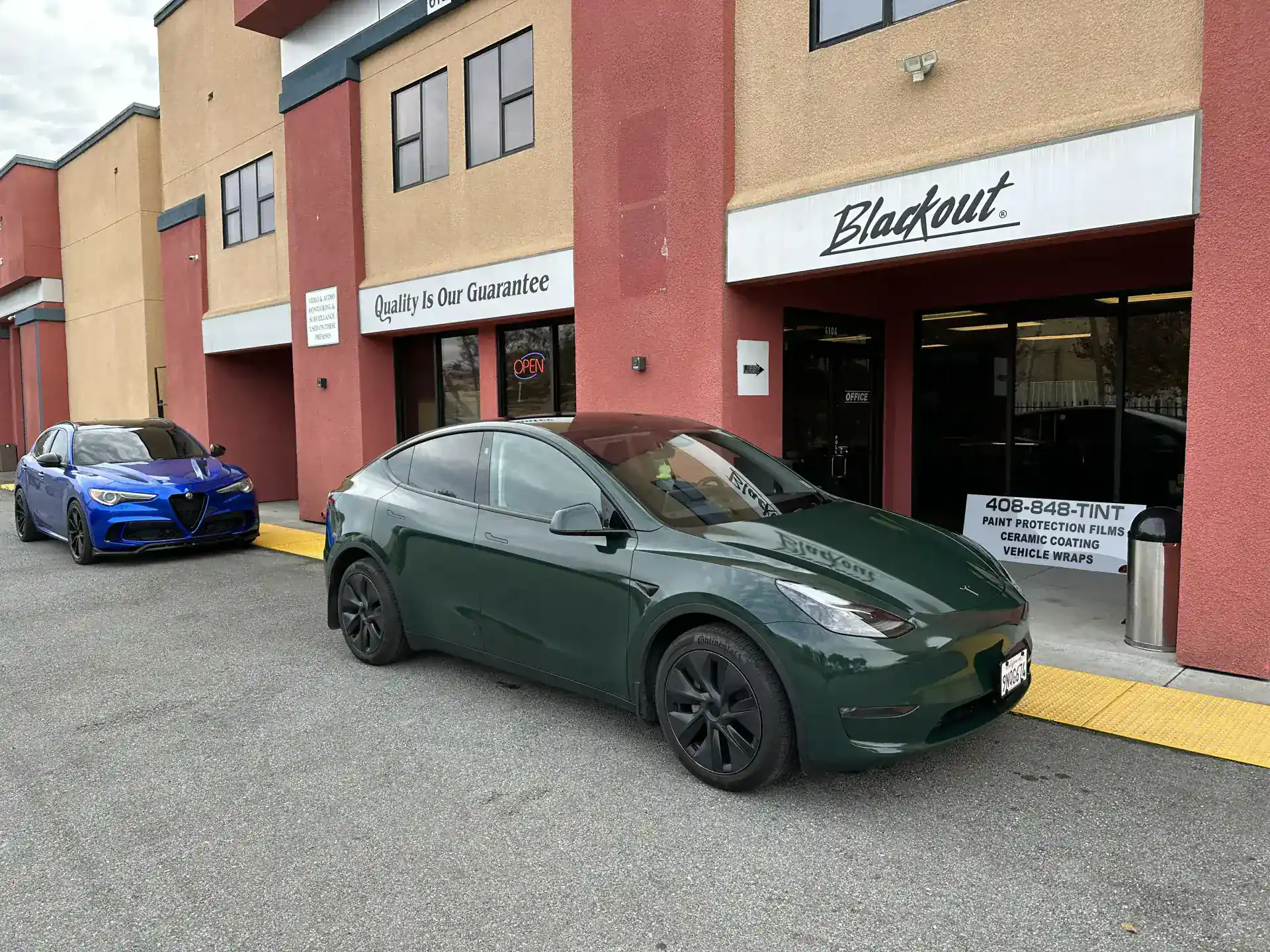
The team at Blackout Window Tinting has been serving the Bay Area since 1993, providing premium window tinting and vehicle protection services.
Experience the Blackout difference. Contact our expert team today for a custom consultation and white-glove service.
Get Your Free QuoteMost readers of this article are researching tips & advice upgrades. Explore our precision-tailored service options.
Two of the most popular vehicle protection options — Paint Protection Film (PPF) and ceramic coating — serve different purposes. Understanding the difference helps you make the right investment for your vehicle.
| Feature | PPF (Clear Bra) | Ceramic Coating |
|---|---|---|
| Protects against | Rock chips, scratches, road debris | Water spots, UV, chemical stains |
| Physical barrier | ✅ Yes — thick film | ❌ No — molecular bond |
| Self-healing | ✅ Minor scratches heal with heat | ❌ No |
| Hydrophobic | Moderate | ✅ Excellent |
| UV protection | ✅ Strong | ✅ Strong |
| Gloss enhancement | Maintains OEM | ✅ Deep, wet-look gloss |
| Thickness | 8-10 mil (200-250 microns) | 1-3 microns |
| Durability | 7-10 years | 2-5 years (depends on grade) |
| Cost (full front) | $1,500–$6,000 | $800–$2,500 (full vehicle) |
| Installation time | 1-3 days | 1-2 days (includes prep) |
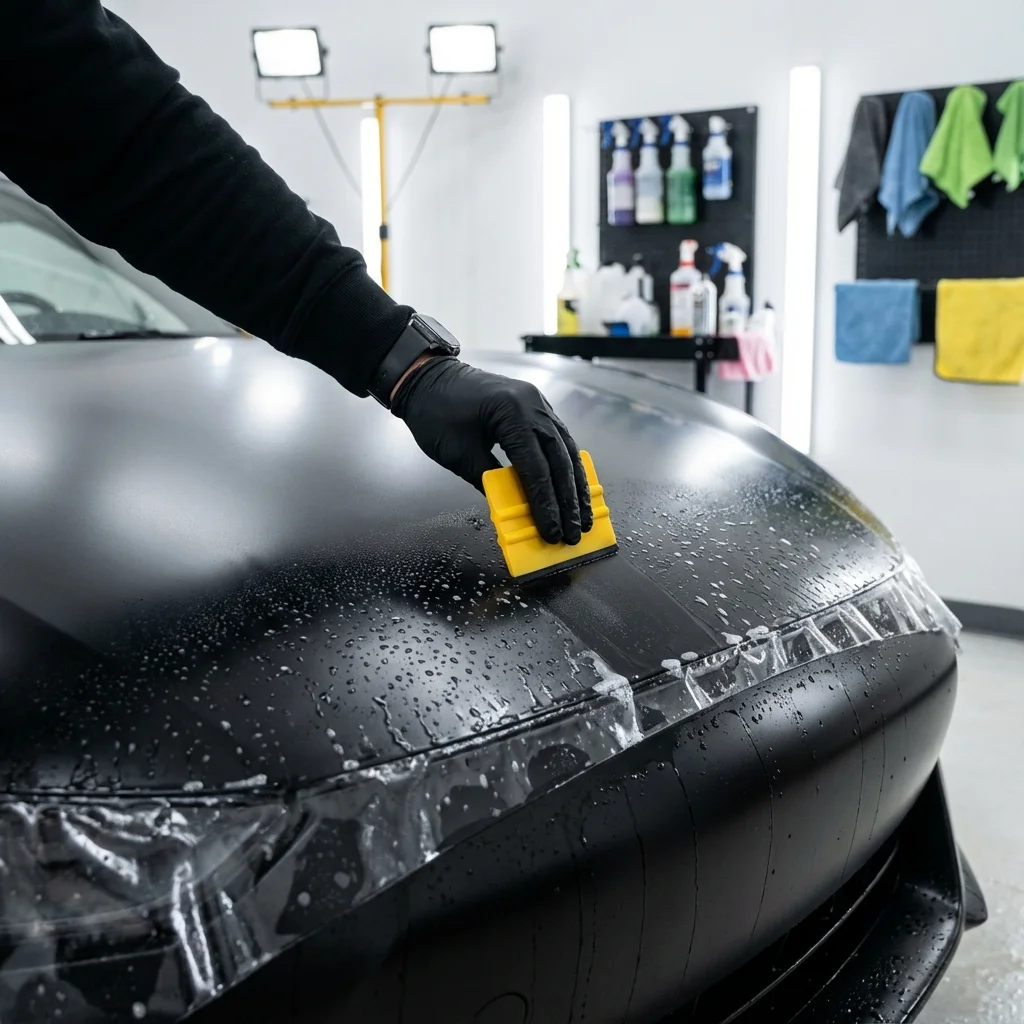
PPF — also called "clear bra" — is a transparent, thermoplastic urethane film applied directly to your vehicle's painted surfaces. Think of it as an invisible shield.
The film physically absorbs impacts that would otherwise chip or scratch your paint. Premium films like XPEL Ultimate Plus and LLumar Valor feature self-healing technology — minor surface scratches disappear with heat exposure from the sun or warm water.
Most popular coverage areas (from most to least critical):
Ceramic coating is a liquid polymer that chemically bonds to your vehicle's paint, creating a semi-permanent layer of protection. It's not a physical barrier but a molecular shield.
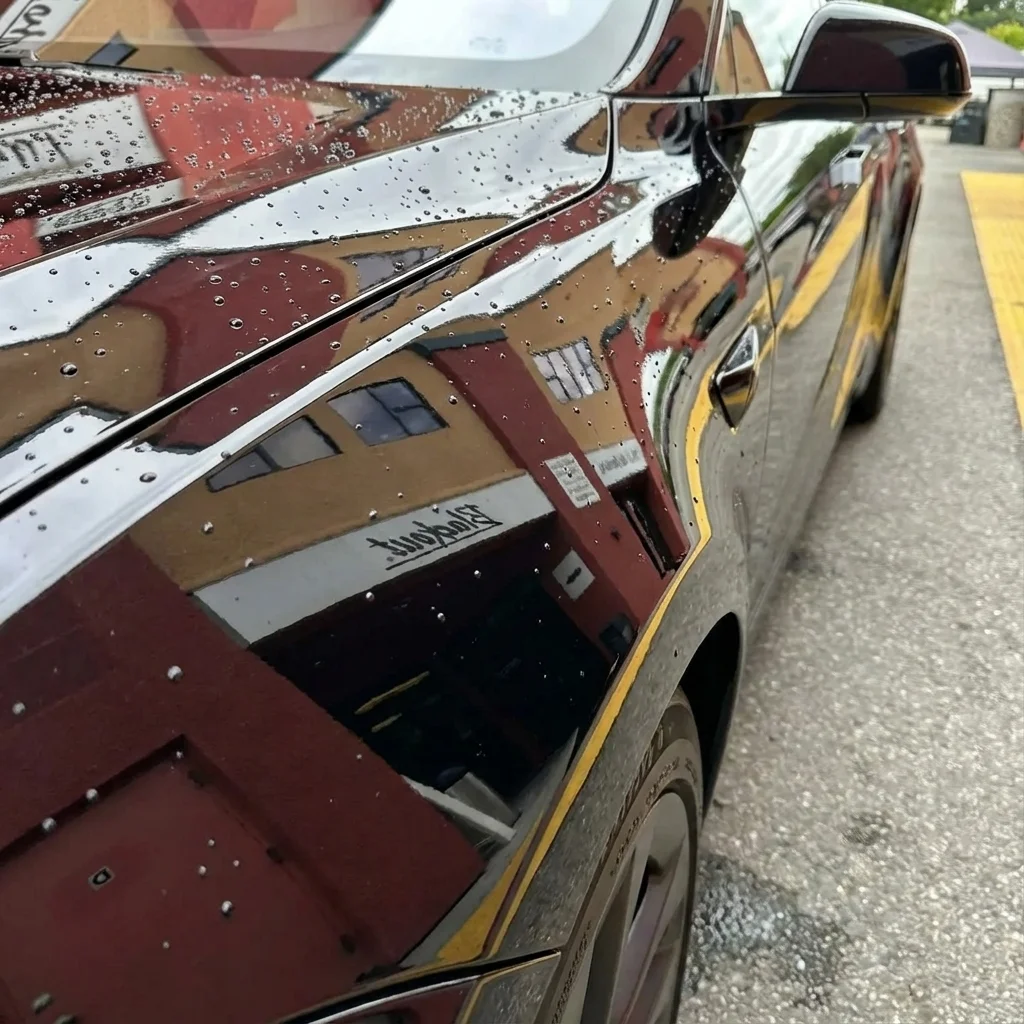
The SiO2 (silicon dioxide) coating fills microscopic pores in your paint's clear coat, creating a hydrophobic surface that repels water, dirt, and contaminants. Water beads and rolls off, carrying dirt with it — the "self-cleaning" effect.
| Grade | Duration | Cost (Full Vehicle) | Best For |
|---|---|---|---|
| Consumer (spray-on) | 3-6 months | DIY ($30-80) | Budget maintenance |
| Professional 1-year | 12-18 months | $500-800 | Daily drivers |
| Professional 3-year | 2-4 years | $800-1,500 | Most vehicles |
| Professional 5-year+ | 4-7 years | $1,500-2,500 | Premium vehicles |
The fundamental distinction is simple:
PPF stops rocks. Ceramic coating stops water spots. Neither does the other's job.
PPF is the right choice when:
Ceramic coating is the right choice when:
For maximum protection, we recommend PPF on high-impact areas + ceramic coating on the entire vehicle (including over the PPF).
This approach gives you:
| Package | Covers | Bay Area Price |
|---|---|---|
| PPF full front | Hood, fenders, bumper, mirrors | $1,800-$3,500 |
| Ceramic coating | Full vehicle (over paint + PPF) | $800-$1,500 |
| Window tint | Full vehicle ceramic tint | $400-$800 |
| Bundle savings | All three services | Save 10-15% |
False. Ceramic coating cannot stop a rock chip. It's 1-3 microns thick — PPF is 200+ microns. They serve completely different purposes.
Outdated. Modern premium films use non-yellowing adhesives and UV inhibitors. Quality PPF maintains clarity for 7-10 years.
Technically yes, but results vary wildly. Professional application includes paint correction (removing swirls and scratches before coating), controlled environment application, and even layer distribution. DIY spray coatings last months, not years.
New cars are the most vulnerable. Factory paint has the most value to preserve, and new soft paint is especially susceptible to rock chips and swirl marks.
Yes — this is actually the ideal setup. Ceramic coating over PPF adds hydrophobic properties and gloss to the film while making it easier to clean.
PPF typically lasts 7-10 years. Ceramic coating lasts 2-5 years depending on the grade. PPF is the longer-lasting investment.
Absolutely. Daily drivers face the most exposure to road debris, parking lot hazards, and environmental contaminants. PPF on the front end protects the highest-impact areas.
Hand wash with pH-neutral soap every 2 weeks. Avoid automatic car washes with brushes. Apply a ceramic topper spray every 6 months to refresh the coating's hydrophobic properties.
Want to find the right protection for your vehicle? Get a free quote or call (408) 848-8468. We'll assess your driving habits and recommend the perfect protection package.