EVs need ceramic-only tint ($500-800)—metallic films block phone key, GPS, cameras. Tesla 3/Y: $600-800 ceramic. 3-8% range improvement from heat reduction. Verify: "What film technology?" "Have you done my model?" "Will it affect Autopilot?"
Electric vehicle window tinting requires special considerations. Learn why standard tint films can interfere with EV tech and what Bay Area EV owners need to
The team at Blackout Window Tinting has been serving the Bay Area since 1993, providing premium window tinting and vehicle protection services.
Experience the Blackout difference. Contact our expert team today for a custom consultation and white-glove service.
Get Your Free QuoteMost readers of this article are researching window tinting upgrades. Explore our precision-tailored service options.
A Rivian R1T owner came to us last month with a problem.
He'd gotten his truck tinted at a "highly-rated" shop near Fremont. A week later, his Gear Guard cameras were throwing errors. His phone key was glitchy. And his range had dropped 15 miles.
The culprit? The shop used a metallic window film—a common budget option that worked fine on gas cars for decades. But on an EV? It was creating invisible chaos.
Electric vehicles aren't just cars with batteries. They're rolling computers with:
Standard metallic tint films contain metal particles that interfere with signals. In a gas car, this might cause slightly weaker radio reception. In an EV, it can disable safety systems.
How they work: Tiny metal particles reflect heat and light.
The problem: Those same metal particles block wireless signals, creating a Faraday cage effect.
EV issues caused:
Cost: $150-$300 for full vehicle
How they work: Carbon particles absorb and disperse heat.
The situation: Better than metallic, but some carbon films still contain trace metals or metallic reflective layers.
EV issues possible:
Cost: $300-$500 for full vehicle
How they work: Nano-ceramic particles block infrared heat without conducting or reflecting signals.
Why they're EV-perfect:
Cost: $500-$800+ for full vehicle
Unique considerations:
What goes wrong: Metallic film on front windows can cause Autopilot disengagement warnings. Cheap film on the roof causes excessive hazing over time from heat.
Our approach: Ceramic-only films, with specific attention to camera clearance zones. We use specialized films rated for glass roof applications. Learn more about our Tesla/EV tinting services →
Unique considerations:
What goes wrong: The Gear Guard cameras are particularly sensitive to reflective films. Phone key range drops significantly with metallic tint.
Our approach: Premium ceramic film with verified signal-transparency testing.
Unique considerations:
What goes wrong: BMW's UWB digital key is extremely sensitive to signal interference. Even "mild" metallic content can cause key failures.
Our approach: Top-tier ceramic films with BMW-specific testing protocols.
Unique considerations:
What goes wrong: Lucid owners expect perfection. Any shimmer, bubbles, or system interference is unacceptable at this price point.
Our approach: Show-car-quality installation with extended curing and multi-point quality checks.
Unique considerations:
What goes wrong: The Taycan's curved rear glass is notoriously difficult to tint without bubbles. Cheap films fail within months.
Our approach: Premium films with heat-forming techniques for perfect curved glass application.
Here's something most shops don't know or won't tell you:
Dark window tint on an EV can actually improve your range.
How? By reducing the thermal load on your cabin:
Studies suggest properly tinted EVs can see 3-8% range improvement in hot climates—that's 10-25 extra miles on a Model Y.
But here's the catch: only ceramic films provide this benefit without introducing signal problems.
Before booking with any shop, ask:
✅ Good answer: "We use ceramic films exclusively on EVs—brands like LLumar CTX/IRX, 3M Ceramic IR, or XPEL XR." ❌ Bad answer: "We have different options at different price points."
✅ Good answer: "Yes, we've done dozens of [your model]. Here are photos."
❌ Bad answer: "An EV is just like any other car."
✅ Good answer: "Not with the ceramic films we use—we test after every install." ❌ Bad answer: "That shouldn't be a problem." (They don't know.)
✅ Good answer: "Yes, if the film causes any system interference, we'll replace it at no cost." ❌ Bad answer: Hesitation or conditions.
✅ Good answer: Climate-controlled, clean, well-lit. ❌ Bad answer: Outdoor installation or cluttered space.
Here's what you should expect to pay in 2026:
| Vehicle Type | Budget Option (Carbon) | Premium Option (Ceramic) |
|---|---|---|
| Tesla Model 3/Y | $400-$500 | $600-$800 |
| Tesla Model S/X | $500-$600 | $700-$900 |
| Rivian R1T/R1S | $500-$650 | $750-$950 |
| Porsche Taycan | $550-$700 | $800-$1,000 |
| Lucid Air | $600-$750 | $850-$1,100 |
Windshield tint (clear ceramic IR-blocking for heat rejection) adds $200-$400.
At Blackout Window Tinting, we've been preparing for the EV revolution since Tesla opened in Fremont:
Stop risking your EV's technology with shops that don't understand the difference.
📞 Get a free EV tinting quote — mention your specific make and model for accurate pricing.
📍 Visit our Gilroy shop — 30 minutes from Tesla's Fremont factory.
EVs rely on wireless signals for essential functions that gas cars don't have. Phone key systems use Bluetooth, autopilot uses cameras behind glass, Sentry Mode records through windows, navigation requires GPS signals, and cellular connections enable over-the-air updates. Metallic window tint creates a barrier to these signals because metal particles reflect and block radio frequencies. Gas cars tolerate minor signal interference (weaker radio reception), but EVs can experience system failures affecting safety features.
Properly installed ceramic window tint does not interfere with Tesla Autopilot cameras. The key is using quality ceramic films (not metallic) and maintaining clearance around camera and sensor zones. We never tint directly over forward-facing cameras on the windshield. Side and rear cameras see through ceramic tint without issues—the ceramic particles don't obstruct visible light the way metallic particles block wireless signals. We verify all camera and sensor functionality before you leave.
Yes, properly selected window tint can measurably improve EV range. By reducing the thermal load on your cabin, window tint decreases how hard your climate control must work. Studies show 3-8% range improvement in hot weather conditions—that translates to 10-25 extra miles on vehicles like Model Y. The key is using ceramic films that block infrared (heat) energy without metallic layers that would interfere with EV systems.
Yes, and we recommend it for most EVs with glass roofs. Factory glass roofs often let in significant infrared heat despite UV coatings. Ceramic roof tint blocks additional heat while maintaining visibility of the sky. For Tesla Model 3/Y and similar vehicles, we use specialized films rated for glass roof applications that won't bubble, haze, or fail from the intense heat exposure. Light tint levels (70-50% VLT) provide heat rejection while maintaining the open, airy feel.
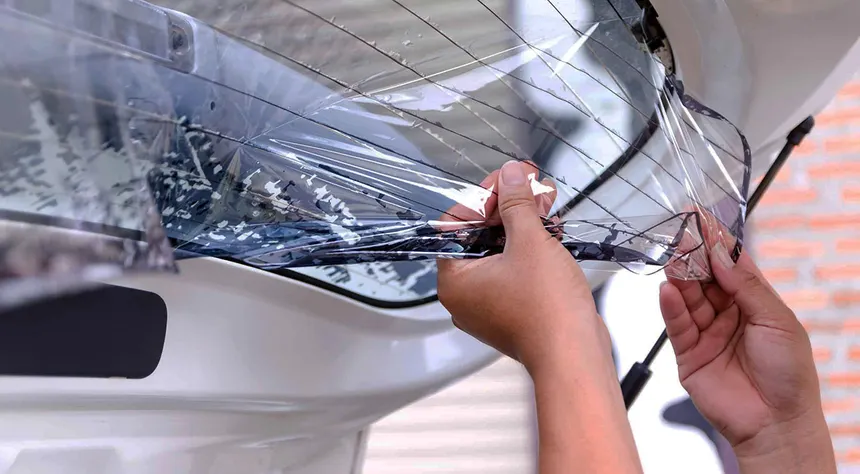
We can remove and replace problematic metallic tint with ceramic film. First, we'll diagnose whether window tint is actually causing your issues (sometimes problems have other causes). If metallic film is the culprit, removal takes a few hours, and we'll install appropriate ceramic film immediately. Some shops will remove their own tint under warranty if it's causing system interference—worth asking before paying for replacement.
EV tinting costs $100-$300 more than comparable gas car tinting due to the ceramic film requirement. A typical Model 3/Y costs $600-$800 for full ceramic tint, compared to $400-$500 for carbon film on a similar-sized gas vehicle. The ceramic requirement isn't optional—metallic films simply don't work on EVs. Consider this premium part of EV ownership costs, and factor in the energy efficiency benefits that can partially offset the price difference.
Windshield tint (clear ceramic IR-blocking film) is becoming increasingly popular for EVs. It blocks significant heat without reducing visibility or affecting cameras. Legal options include clear films meeting California's 70%+ VLT requirement or medical exemption tints covered by prescription. Windshield ceramic film adds $200-$400 to total tinting cost but provides substantial cabin comfort improvement, particularly for Teslas with their large, steeply-raked windshields.
After leaving a tint shop, test all wireless functions: phone key (lock, unlock, start), Bluetooth audio and phone calls, cellular signal strength, GPS accuracy, and all camera/sensor-dependent features (Autopilot, parking sensors, Sentry Mode). Any issues appearing after tint installation likely indicate problematic film. We perform these tests before delivery and document baseline functionality. Keep records of any issues to present to your tint shop if warranty work is needed.
Blackout Window Tinting is the Bay Area's premier choice for premium auto protection. Based in Gilroy at 610 Holloway Rd (behind Target), we've served the South County and Silicon Valley area for over 33 years. Whether you're coming from Morgan Hill, Hollister, or anywhere else in the Bay Area, we're your trusted local source for professional window tint, PPF, and ceramic coating.
📞 Questions? Call us at 408-848-8468 or get a free quote online.
Learn more about the professional-grade products we use:
We clean your vehicle and apply the desired service quickly and efficiently.
It can last for years with proper care.
Absolutely, all of our products are 100% safe.